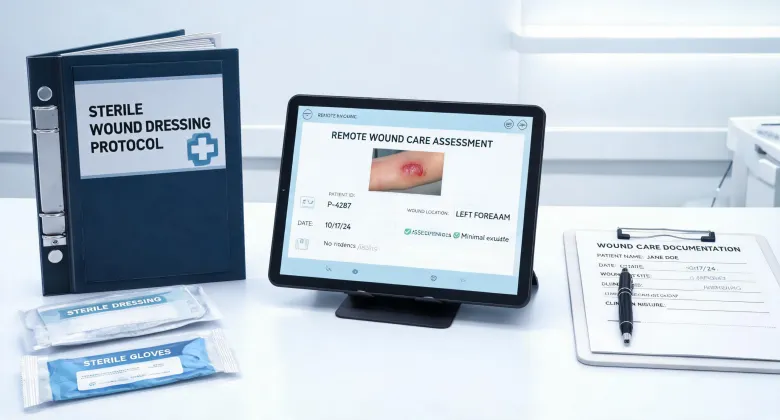
I'm a quality and brand compliance manager at a medical device distributor. I review every product spec before it reaches our hospital customers—roughly 200+ items annually. In 2024, I rejected about 12% of first deliveries due to documentation gaps or spec mismatches. Here are the questions I get most often about Mölnlycke, surgical drapes, CPAP machines, and immunoassay.
What does Mölnlycke actually make, and why does it matter for my hospital's supply chain?
Mölnlycke is a Swedish medical device company focused on wound care and surgical solutions. Its US arm, Mölnlycke Healthcare US LLC, supplies hospitals with Mölnlycke wound care products (like Mepilex, Mepiform, Melgisorb), surgical gloves (Biogel), and surgical drapes and gowns (Barrier). The differentiator is Safetac silicone adhesive technology, which is designed to reduce pain and skin damage during dressing changes. But—and this is important—not every product fits every scenario. If your hospital mostly needs basic gauze for low-exudate wounds, a premium silicone dressing may not be the most cost-effective choice. I recommend evaluating based on your patient mix and clinician training, not just brand reputation.
How do I evaluate Mölnlycke wound care products against our current dressings?
Start with specs, not sales claims. Ask for clinical evidence, FDA clearance, and ISO 13485:2016 certification. I'm not a clinician, so I can't speak to clinical outcomes. What I can tell you from a compliance perspective is: request a side-by-side trial. When I compared two wound care products side by side—same price, different adhesive layer—I finally understood why the details matter. Safetac usually reduces trauma at dressing changes, but if your nurses aren't trained on it, you won't see the benefit. To be fair, some alternatives may work fine for simple wounds. The honest limitation: Mölnlycke wound care products are not the best fit for every wound type, especially heavily infected or high-exudate wounds where other therapies are indicated.
What should I look for in a surgical drape specification?
Focus on fluid resistance, not just material. The standard is AAMI PB70, which rates barrier performance from Level 1 to Level 4. For most OR procedures, Level 3 or 4 is typical. I said 'standard drape.' They heard 'basic drape.' Result: a surgical drape that didn't meet our fluid resistance spec—we had to reject a full batch. Now every contract includes the exact AAMI level and dimensions. Mölnlycke's Barrier line offers various levels, but if your facility only does low-risk outpatient procedures, a lower level might be sufficient. Check the label, not the brochure. Also verify sterilization method and shelf life. As of January 2025, typical lead times are 3-4 weeks, but I'm not 100% sure about current backorders.
We're also sourcing a CPAP machine. Does the same quality framework apply?
Yes, though Mölnlycke doesn't make CPAP machines. The principle is identical: verify FDA 510(k) clearance, check for ISO 13485, and demand post-market surveillance data. The 2023 CPAP recall changed how I think about supplier audits—one missed quality signal led to thousands of units being pulled. For a CPAP machine, look at noise level, humidifier compatibility, and mask comfort. But don't assume a brand's reputation in one category translates to another. A company strong in wound care may not be the best in respiratory devices. My advice: use the same vendor qualification protocol you'd use for any Mölnlycke product.
What is immunoassay, and why do clinicians ask about it during device evaluations?
Immunoassay is a lab technique that uses antibodies to detect specific molecules—like proteins, hormones, or drugs—in a sample. It's common in diagnostics. During device evaluations, clinicians sometimes ask if a product will interfere with immunoassay results. For example, certain wound dressings or surgical materials could contaminate a sample if not handled properly. But this gets into clinical chemistry territory, which isn't my expertise. I'd recommend consulting your lab director. What I can tell you from a compliance perspective is: if a vendor claims their device is compatible with immunoassay workflows, ask for validation data. Don't take it at face value. Most Mölnlycke wound care products don't directly interact with immunoassay, but always verify.
When is Mölnlycke not the right fit for a hospital?
Three scenarios: (1) Your budget is extremely tight and you only need basic wound care—premium silicone dressings may be overkill. (2) Your nursing staff hasn't been trained on Safetac technology—you won't get the benefits. (3) Your patient population has specific needs, like high-exudate wounds, where other product categories are typically indicated. I recommend Mölnlycke for most standard wound care and surgical draping, but if you're in that 20% edge case, be honest with your vendor. A good supplier will tell you when their product isn't the best fit. That honesty saves everyone time and money.
How do you verify claims from any medical device vendor, including Mölnlycke Healthcare US LLC?
I use a three-step protocol: (1) Demand the FDA clearance letter and ISO 13485 certificate. (2) Ask for two clinical references you can call—not just the ones on their website. (3) Run a blind test with your own team if possible. In 2024, I rejected about 12% of first deliveries because documentation didn't match the spec sheet. That's not a knock on any brand; it's just reality. For Mölnlycke Healthcare US LLC, their documentation is usually thorough, but I still verify. Never accept 'industry standard' as a substitute for your standard. Write your own specs, then hold vendors to them.