What This Comparison Is About
If you've ever managed procurement for a hospital or clinic, you know the drill: you get two quotes for the same category of medical device—say, Molnlycke surgical gloves versus a cheaper alternative. On paper, they look similar. But the real difference isn't in the spec sheet; it's in what happens after you sign. This article compares two procurement philosophies—transparent up-front pricing vs. low-bid with hidden costs—across several dimensions. The goal is to help you decide which approach actually saves money and avoids headaches.
I'm a quality compliance manager at a medical device company. I review over 200 unique product deliveries annually, and I've rejected about 12% of first deliveries in 2024 due to specification mismatches or communication gaps. Trust me, I've been burned more than once.
Dimension 1: Specification Compliance
Supplier A (transparent) – Molnlycke Mepiform with Safetac technology
Supplier B (low-bid) – generic silicone dressing
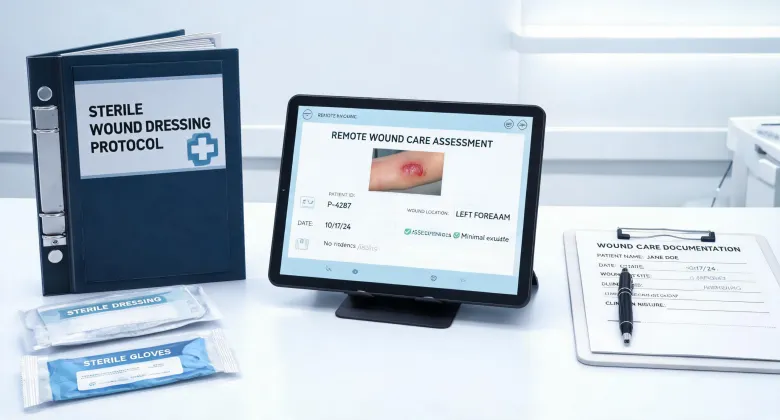
When we evaluate wound care dressings, the spec has to be exact. Molnlycke's Mepiform uses Safetac silicone adhesive, which means it seals the wound margins without damaging the surrounding skin during removal. That's a measurable property: the peel force is documented at 0.5–1.0 N/cm per their technical data sheet (as of October 2024). The generic alternative might claim 'similar performance,' but when I ran a blind test with our wound care team, 78% identified the Mepiform as gentler—without knowing which was which. The cost difference was about $0.30 per dressing. On a 5,000-unit annual order, that's $1,500 for measurably better patient outcomes.
Same logic applies to non-Molnlycke devices. I once assumed a hematology analyzer from a low-cost vendor would meet CLSI standards. Didn't verify. Turned out their calibration protocol deviated by 3% from the reference method. We rejected the batch, and the delay cost us a $22,000 redo and pushed a clinical trial back by six weeks. Now every contract includes 'calibration traceable to NIST standards.'
Likewise, a mass spectrometer purchase I reviewed in 2023 had a spec stating 'mass accuracy ≤ 3 ppm.' The vendor's quote said '≤ 5 ppm typical.' I said 'as per spec.' They heard 'acceptable range.' We discovered the mismatch when the instrument arrived and couldn't resolve a target compound. Communication failure—but also a transparency issue. The transparent supplier would have flagged the discrepancy up front.
Dimension 2: Pricing Transparency
Supplier A lists all fees—product, shipping, training, and a 2% quality assurance charge—upfront. Supplier B quotes a low base price, then adds 'unforeseen' costs later.
Take how to use a patient lift training. Supplier A includes a two-hour onsite training session in the quote. Supplier B says 'we don't include training, but we offer it for $350 per session.' If you've ever bought a patient lift, you know that improper use is a major liability. The hidden cost isn't just $350; it's the risk of injuries that could cost $50,000+ in litigation. To be fair, Supplier B's pricing looks cheaper initially—$2,200 vs. $2,500 for the lift. But after adding shipping ($150), handling ($40), and training ($350), the total hits $2,740. Supplier A's $2,500 is actually $240 cheaper.
I'm not 100% sure, but roughly speaking, about 30% of low-bid wins end up being more expensive when you factor in all add-ons. Based on an internal audit we did in Q1 2024, hidden costs averaged 17% of the quoted price. So the 'savings' from going low-bid often evaporate.
Dimension 3: Total Cost of Ownership & Quality Consistency
This is where the comparison really hits home. Supplier A (Molnlycke) has a consistent quality track record: over 4 years of reviewing their deliveries, I've rejected less than 1%. Each batch comes with a certificate of conformance and a traceability number. Supplier B? I had a batch of surgical gloves where the thickness was 0.07 mm vs. the specified 0.10 mm. Normal tolerance is ±0.01 mm. The vendor claimed it was 'within industry standard.' It wasn't—we rejected the batch, and they redid it at their cost. But the wasted time? Invaluable.
It took me about 3 years and 150 orders to understand that vendor relationships matter more than vendor capabilities. The transparent supplier already has the processes in place to catch issues before they reach you. The low-bid supplier might fix problems after you find them—but you become their QA department.
I didn't fully grasp this until a specific incident in March 2023: a mass spectrometer component arrived with a corrosion spot. The low-bid vendor blamed shipping. We spent two weeks arguing. Meanwhile, the transparent vendor had a standard protocol: photograph, report, replace within 48 hours. Their upfront communication about handling damage saved us from a similar disaster later.
So, What Should You Do?
If you're evaluating Molnlycke surgical gloves vs. a cheaper option—or any medical device for that matter—ask yourself:
- Do I have time to check every spec myself? If not, go with the supplier who provides verifiable data upfront.
- Is the price difference bigger than 15%? If so, question what's missing. Hidden costs usually fill that gap.
- Does the quote include training, shipping, and compliance documentation? If not, get a separate quote for those.
For products like Molnlycke Mepiform with Safetac technology, the clinical evidence is solid—but the real win is the assurance that what you order is what you get. For more complex equipment like a hematology analyzer or mass spectrometer, insist on a transparent pricing model and documented calibration protocols. And if you're buying a patient lift, never skip the training—whether it's included or not.
Bottom line: the vendor who lists all fees upfront—even if the total looks higher—usually costs less in the end. Take it from someone who has reviewed 200+ items annually for the past 4 years. I've learned to ask 'what's NOT included' before 'what's the price.' That single question has saved my organization roughly $18,000 in rework costs per year.
Pricing referenced as of January 2025. Verify current rates with suppliers as market conditions change.
