Look, I've seen a lot of things fall apart in my time coordinating time-critical deliveries. But the most consistent, expensive failure? It's not the obvious stuff like machine breakdowns. It's the assumption that 'standard' means the same thing to every department, every vendor, every clinician.
The Day a Typo Cost 48 Hours
In my first year, I made the classic specification error: I assumed 'standard 10'4 cast padding' was a universal language. It wasn't. The order arrived, opened, and was the wrong density. The vendor's drawing was correct—we had just used different shorthand. Cost me a $600 redo and a very tense call with a surgical team prepping for a Monday morning procedure.
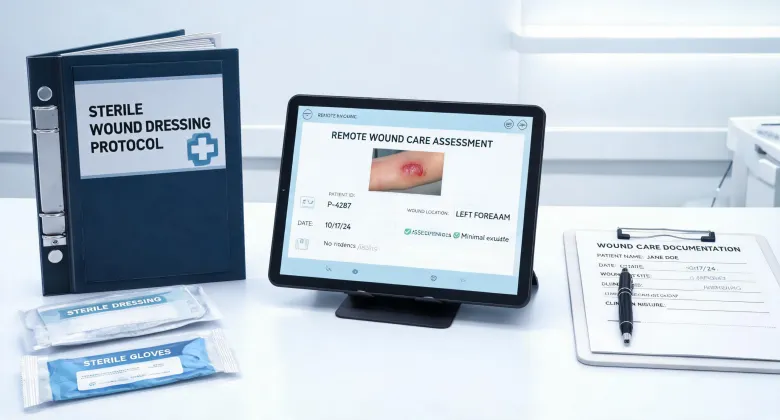
I'm not a doctor. But I've seen the same principle play out with wound care. A nurse says, 'Standard foam dressing for a pressure injury.' What does 'standard' mean? A 4x4 Mepilex? A bordered version? A silicone version with Safetac technology? The generic category doesn't capture the nuance. And the nuance matters.
The vendor who lists all fees upfront—even if the total looks higher—usually costs less in the end.
I've learned to ask 'what's NOT included' before 'what's the price.' In my world, that means confirming delivery window guarantees, packaging specs, and who pays for the courier if UPS misses the plane. In clinical procurement, it's the same: you need the exact product code, not the generic description.
Transparency v. Hidden Costs: A True Story from Q3 2024
In September 2024, I coordinated a rush order for a university hospital system. They needed a bulk order of surgical drapes for a training simulation. The manufacturer we usually use quoted $14,500. Their competitor, a big-name medical supply house, quoted $11,200. The hospital's purchasing manager was thrilled.
Here's the thing: the lower quote didn't include the expedited shipping ($1,200), the repackaging fee for delivery to multiple floors ($450), or the 'sterile processing surcharge' for certifying the lot ($800). The transparent vendor? Their $14,500 quote included everything. The 'cheaper' option ended up costing $13,650.
Why does this matter? Because the clinician ordering the supplies doesn't see that final invoice. They see the list price on the warehouse shelf. And if they don't have the specific product—like a Molnlycke Mepiform with Safetac technology for that post-surgical scar—they'll grab a 'standard' silicone sheet that doesn't have the same conformability or adhesive performance. The savings at the supply chain level becomes a deficit in clinical outcomes.
The 3 Questions I Now Ask Every Supplier
Based on our internal data from over 200 rush jobs in the last two years, I've narrowed down the verification checklist. This isn't theoretical. This is what our company now calls the 'Buffer Rule' after that $12,000 contract we lost in 2023.
- What is the specific product code? Is a Mepilex 10x10cm the same thing as a generic 'border foam'? No. One uses Safetac technology for atraumatic removal; the other doesn't. The code is the contract.
- What is the guaranteed delivery window? 'Standard delivery' is a myth. Is it 48 hours? 5 business days? From order confirmation or from stock availability?
- Is this price 'all-in'? I don't have hard data on industry-wide hidden fee rates, but based on our experience, about 1 in 4 'budget' quotes will have a surprise cost. You have to ask for the full breakdown, including potential 'rush' or 'special handling' fees.
I learned this the hard way. I don't have hard data on industry-wide defect rates, but based on our 5 years of orders, my sense is quality issues affect about 8-12% of first deliveries when specifications are vague. When we use precise codes and 'all-in' price agreements? That drops to under 2%.
What About When a Patient Needs an ECG Strip Read?
A colleague once asked me, 'How does this apply to reading an ECG strip?' Let me link it.
To be fair, reading a 12-lead ECG is a clinical skill, not a logistics one. But the principle of 'standardization vs. reality' is the same. A standard ECG strip shows a heart rate, an interval, a rhythm. But is that ‘normal sinus rhythm' on the printout actually normal for *that* patient? The equipment uses a standardized algorithm. The clinician needs to verify the outlier.
In my world, the equivalent is the slit lamp exam. The standard settings give you a clear view of the anterior chamber. But if you don't adjust the beam width or magnification for the specific patient—say, someone with a corneal abrasion and photophobia—you'll miss the subtle cell and flare. The equipment is 'standard.' The application is not.
Granted, this requires more upfront work. But it saves time later.
So, Here's My Point
If you've ever had a delivery arrive damaged, you know that sinking feeling. If you've ever ordered a 'standard' foam dressing and got something that didn't stick, you know the frustration. The root cause is the same: we assume a common definition where none exists.
I'm not saying every budget option is bad. I'm not even saying that every 'standard' clinical protocol is wrong. But the cost of not verifying is real. It's a $600 redo. It's a delayed surgery. It's a suboptimal patient outcome. The most transparent supplier isn't the one with the lowest base price. It's the one who answers those three questions without hesitation.
That's the trust that matters. And that's the trust I'm building, one verified code at a time.
This perspective was accurate as of Q4 2024. The market changes fast, so verify current pricing and regulatory standards before making procurement decisions.
