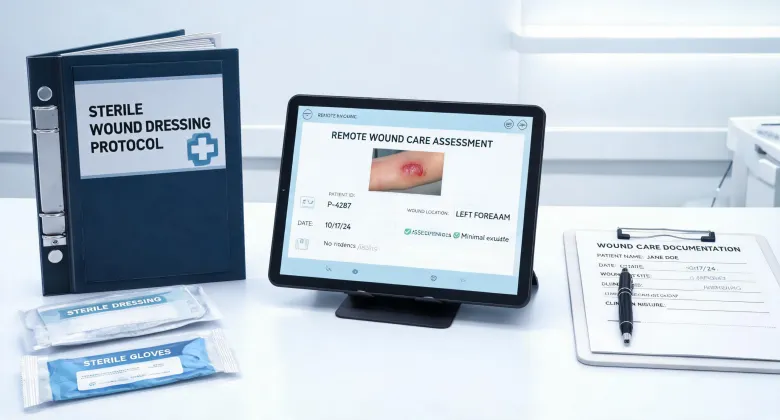
In March 2024, I got a call from our burn unit at 9:47 PM. They needed 35 Mepilex® Transfer dressings by 7 AM for a patient coming in from a house fire. Normal delivery time was four days. We made it happen—emergency overnight freight, a distributor who picked up on the second ring—and those dressings were on the patient's chest by 6:40 the next morning.
That's the kind of situation I live in. I've spent eight years coordinating surgical and wound care supplies for a hospital system, handling somewhere around 250 rush requests a year, give or take. This comparison comes from that field experience. Not from a marketing brochure.
Quick Mölnlycke healthcare company overview for anyone who isn't familiar: they're a Swedish medical technology company based in Gothenburg, focused entirely on wound care and surgical solutions. The product families that show up in my orders most often are their Safetac® silicone dressings (Mepilex®, Mepiform®, Melgisorb®) and Barrier® surgical drapes and gowns. They also make Biogel® surgical gloves. In other words, Mölnlycke wound care products are built around one adhesive platform, and their surgical products are built around one barrier principle. That focus matters, as you'll see.
I'll compare these against the conventional alternatives hospitals default to, across three dimensions: adhesive technology, performance in the operating room, and total cost of care. Let's dig in.
Dimension 1: Adhesive Technology — Safetac® vs. Traditional Adhesives
This is where Mölnlycke's wound care products stand apart. Safetac® is a silicone adhesive that contacts the skin and seals gently. Traditional dressings use acrylic adhesives that form a much harder, more aggressive chemical bond.
I used to assume "adhesive strength" on a spec sheet told you what mattered on human skin. That assumption was wrong. A spec sheet tells you how strongly something sticks. It doesn't tell you what happens when you pull it off an 84-year-old patient's forearm.
Traditional adhesives do pull. I've seen skin tears from routine dressing changes more times than I can count. Each tear is a new wound, a new infection risk, a new billing code. Safetac® doesn't do that—it releases without stripping skin. I remember one of our wound care nurses using Mepilex® Border for the first time and saying, "This is how it's supposed to feel."
But let me be balanced here. For a healthy adult with a minor surgical wound and intact skin, a traditional dressing works fine. The difference is less dramatic. Safetac® matters most when skin is fragile, when dressing changes happen frequently, or when the wound is chronic and the surrounding skin is already compromised.
Conclusion: When your patient population includes elderly, diabetic, or skin-compromised individuals, Safetac® wins this dimension without much argument.
Dimension 2: What Is a Surgical Drape? Barrier® vs. the Standard Option
Let's step into the OR for this one.
First, a quick definition. What is a surgical drape? In short: it's the sterile barrier that defines the surgical field. Picture the scene—a patient is positioned on the operating table, a vital signs monitor tracks every heartbeat, and the drape separates the incision site from everything that could contaminate it. Skin, bedding, the environment. The drape is the line.
Conventional drapes are typically non-woven fabric. They're fine for short procedures with minimal fluid exposure. If you're doing a 15-minute skin biopsy, honestly, any drape will work.
The comparison gets interesting once fluids enter the picture. Orthopedic cases, cardiac procedures, trauma surgeries, C-sections—these generate blood, saline, and irrigation fluid in serious volumes. Standard drapes can saturate. And once fluid strikes through, the sterile field is compromised. I've watched it happen. It's not a dramatic event—just a quiet, wet failure that puts the patient at risk.
Mölnlycke's Barrier® line is built for that environment. The material is fluid-resistant, and many of the drapes have engineered adhesive zones that create a seal around the surgical site. There's also an incise film version that adheres directly to the patient's skin, making the skin itself part of the sterile field.
I remember a complex orthopedic trauma case—multi-hour, power tools, irrigation, the works. The Barrier® drape held flawlessly: no strikethrough, no wicking, no issues. The surgical team didn't have to think about the drapes once. Which is exactly the point. If you're thinking about your drape during surgery, something's already wrong.
Conclusion: For short, clean cases, standard drapes do the job. For anything invasive, long, or fluid-heavy, Barrier® is the safer call. That difference isn't visible on a price list, but it's very visible in the OR.
Dimension 3: Total Cost of Care — Is the Premium Justified?
This is the dimension where I've seen more supply committees make bad decisions than anywhere else.
The pattern is predictable. A hospital looks at the unit price difference between Mölnlycke products and cheaper alternatives. The savings per piece are real. The committee switches. And then the hidden costs start accumulating.
Let me give you a specific example. One facility in our system switched to a budget foam dressing to save money. I want to say they were paying about 40% less per dressing, but don't quote me on that exact figure. After three months, the wound care nurses were documenting more dressing failures. The cheaper dressing didn't handle moisture as well, lost adhesion after a day or two, and required changes every 36 hours instead of every 72.
When I ran the numbers, the extra dressings and nursing time wiped out the savings. Then two patients developed localized infections that added four and six days to their hospital stays respectively. That was last year, and the cost impact is still showing up in department budgets.
I have mixed feelings about hospital purchasing here. Budgets are genuinely tight, and saving three dollars per dressing across ten thousand dressings is real money. But I've also watched a three-dollar saving turn into thirty dollars in added care costs when outcomes go sideways. The choice that looks frugal on a spreadsheet often isn't.
Conclusion: For the right patients, Mölnlycke's products aren't "expensive." They're cheaper, once you count everything.
What Should You Choose?
If you're making a purchasing decision, here's a practical starting point based on what I've seen work:
- Fragile skin, elderly care, chronic wounds: Choose Safetac® dressings. The reduced tissue trauma alone justifies the price premium, and the total cost picture usually settles in Mölnlycke's favor.
- Short, clean surgical cases: Standard drapes are fine. No reason to overspend.
- Orthopedic, cardiac, trauma, or obstetric cases: Barrier® drapes with adhesive zones or incise film. This is where fluid resistance genuinely protects patients.
- Frequent post-op dressing changes: Mepilex® Border or similar Safetac® products. Changes are faster, less painful, and don't require adhesive removers or skin prep.
When I'm triaging a rush order for surgical supplies, my first question is always about the worst case. If the drape fails at hour two, what happens? If the dressing doesn't hold on a fragile-skinned patient, what's the backup? Mölnlycke products tend to have good answers to those questions. That's why, for the past three years, about 75% of my urgent dressing orders have been for their products. Maybe 80. I'd have to check the system to be sure.
If I could redo the early part of my career, I'd have standardized on Safetac® dressings much sooner. The price difference felt significant back then. It doesn't now—not after watching what cheaper choices cost in outcomes, nursing time, and patient harm.
That's the bottom line. Mölnlycke isn't the right call in every possible scenario. But in my experience, conventional alternatives don't deliver the same clinical performance at any real cost saving. The premium is real. And so are the results that come with it.
