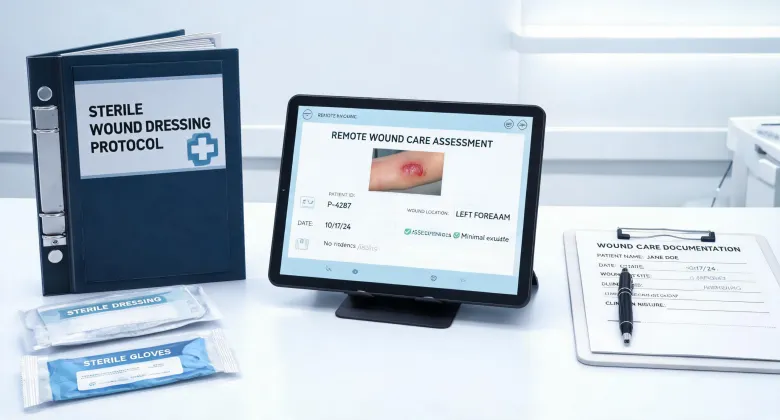
In March 2024, with 36 hours to go before our hospital's first robotic-assisted prostatectomy, I was staring at a cardboard box that should not have been there. The label was generic. The product code didn't match our clinical validation sheet. There was no Mölnlycke Health Care logo anywhere.
A Quick Answer: What Is Robotic Surgery?
Before I get into the supply chain nightmare, let me answer the question I get more often than any other: what is robotic surgery? Simply put, it's a minimally invasive technique where the surgeon controls robotic arms from a console. It allows finer movement, better visualization, and smaller incisions. It also creates a completely different set of surgical supply requirements—especially when it comes to drapes and dressings.
Our hospital had invested heavily in the robot. The surgeons were excited. The board was excited. But nobody had asked the supply chain team whether our existing wound care products were suitable for robotic cases. That turned out to be a bigger problem than anyone expected.
The Low-Bid Trap
In my role coordinating surgical supplies for a 400-bed hospital network, I've handled more than 200 rush orders over the past decade—including same-day turnarounds for OR cancellations and emergency restocks. I know what a true emergency looks like. But this was a different kind of emergency: a self-inflicted bureaucratic one.
Three weeks earlier, our purchasing department—under pressure to cut costs—had accepted a quote from a new supplier. The quote was 32% lower than our standard Mölnlycke dressing order. The purchasing manager saw the numbers, checked the 'comparable' specifications, and pushed the order through. I could not blame her. The spreadsheet said we could save $1,400 per quarter by switching.
The problem? The numbers didn't tell the whole story. The new dressings used a different adhesive. They were not backed by the same clinical evidence. And when the first case cart was assembled, the clinical team leader took one look and said, 'We're not using these on a robotic patient.'
Here's where I hesitated. On one hand, I had a purchase order that was already under contract. On the other, I had a clinical team that refused to use the product. If I forced the switch, we might save money but risk skin damage and delayed recovery. If I went back to Mölnlycke, we would exceed the quarterly budget.
The upside was $1,400 in savings over three months. The risk was a patient with a deep tissue injury, or a surgeon refusing to operate because the drapes didn't meet his sterile field standards. I kept asking myself: is $1,400 worth potentially losing the confidence of our surgical team?
The 36-Hour Race
On the Tuesday afternoon, we discovered the error. The case was scheduled for Thursday morning. Normal Mölnlycke delivery lead time was seven days. We needed the exact dressings and drapes we had clinically validated—the ones with the Mölnlycke Health Care logo and the Safetac® silicone adhesive technology that had performed well in our previous cases.
For a moment, we considered calling the new supplier and asking them to send a sample set that might be closer to the Mölnlycke original. But my gut said no. Every cost analysis pointed to the budget option as the logical choice. Something felt off about their responsiveness when we asked for clinical data. Turns out the product had never been used in robotic surgery anywhere in our region.
So we made the call. I contacted Mölnlycke directly, explained the situation, and asked if they could do a next-day delivery. To their credit, they came through. But it cost us: $420 in expedited shipping, two hours of my team's time on the phone, and one very stressed supply chain coordinator (that's me).
At one point I even checked USPS Priority Mail Express rates as a backup. According to USPS pricing effective January 2025, a flat-rate envelope starts around $30, but the guaranteed morning delivery window didn't work for this location. We needed a courier, and that was the right call.
At 6:47 AM on the morning of surgery, the courier arrived. The box had the Mölnlycke Healthcare logo printed on the side. Inside were the Mepilex® foam dressings and Barrier® surgical drapes we had validated. I signed for it, checked the lot numbers, and physically handed the case cart to the OR team.
The Patient Side of the Equation
While the surgical team was focused on the robot, I was already thinking about what happens after discharge. Our patient was an active 68-year-old who had been using a mobility scooter at home because of pre-existing knee arthritis. After surgery, he would also need a nebulizer machine for a chronic respiratory condition. Nobody in the procurement process had considered that the same patient would need both surgical wound care and post-discharge equipment from different budget lines.
This, more than anything, is what I mean by total cost thinking. The cost of care isn't just the price of a dressing or a drape. It's the cost of follow-up visits if a wound fails. It's the cost of a patient readmission because the adhesive caused skin tears. It's the time your nurses spend managing a product that doesn't peel off cleanly. And yes, it's the coordination cost of making sure a mobility scooter and a nebulizer machine are ready on the same day as discharge.
When a patient needs both a surgical dressing and a mobility scooter, the last thing you want is a dressing failure that delays discharge. The scooter rental alone costs $80 per day. The nebulizer rental is $35 per day. Add that to the cost of an extra hospital day, which is roughly $2,000, and suddenly the $10 difference between a generic dressing and a Mölnlycke dressing becomes irrelevant.
The Verdict
The surgery went well. The patient was out of bed the next day, and discharged on day two. He used his mobility scooter for a few weeks, and his nebulizer at home, but he did not need a single wound-related intervention after leaving the hospital. That is a low-cost outcome.
We also went back and did the math on the failed budget experiment. The initial 'savings' from the low-cost supplier: $1,400 per quarter. The actual cost of the crisis: $420 in rush shipping, $310 in staff overtime, 12 hours of clinical team time to re-validate products, and an unknown amount of trust lost. In the end, the cheap option cost us more than we saved—before we even considered the potential cost of a patient complication.
If you're a hospital administrator, here's the lesson, and I say this with the bias of someone who has now lived it twice: when a supplier promises comparable quality for a lower price, ask for the clinical evidence. Under FTC guidelines (ftc.gov), claims about performance must be substantiated. In the medical world, those substantiation documents are not optional—they are the difference between a safe choice and a gamble.
The way I see it, the total cost of a medical supply includes the unit price, the shipping cost, the clinical validation cost, the training cost, the risk of a complication, and the cost of a failed outcome. If your procurement process only looks at the first line, you are not saving money. You're just delaying the bill.
I still use Mölnlycke products today. Not because they are always the cheapest up front, but because I've yet to find a generic alternative that gives me the same confidence. After 200+ rush orders and one unforgettable near-miss, that confidence is worth more than line-item savings.
In my opinion, the next time someone asks 'what is robotic surgery?' they should also be asking 'what is the total cost of the surgical care around it?' The robot may be the star of the show, but the dressings, drapes, and even the mobility scooter and nebulizer machine waiting at home are all part of the outcome. And that outcome—not the purchase order—is the real cost worth managing.