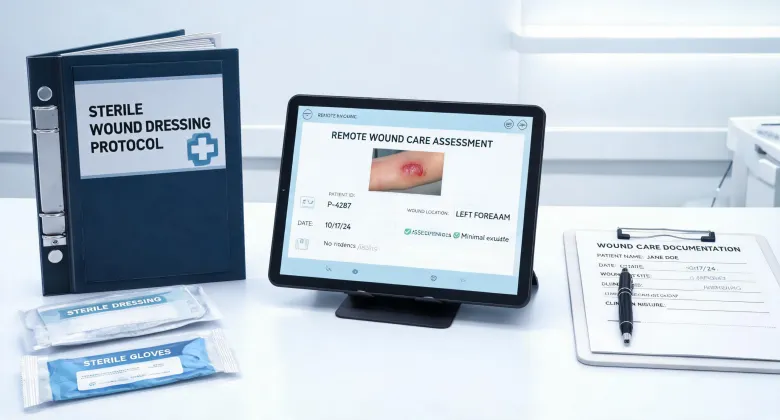
Every healthcare purchasing conversation eventually lands on the same question: 'Which option is right for us?' My honest answer is usually, 'It depends.' That is not a polite dodge. There are three different decision scenarios hiding inside that question, and what works in one will burn you in another. I have spent four years as a quality inspector for a healthcare supply company, reviewing roughly 200 unique SKUs every year. This is the framework I use when I have to approve or reject a deliverable before it reaches a clinician.
The First Cut: What Kind of Product Are You Actually Buying?
Before comparing brands or prices, separate products into three buckets:
- Consumables and infection-control items: wound dressings, gloves, surgical drapes, paper towel dispensers.
- Capital equipment with long lifecycles: blood analyzers, power wheelchairs.
- Sensor-based monitoring technology: continuous glucose monitors.
Why does the category matter? Because the cost equation changes. I only believed in total cost thinking after skipping it once and eating an $800 mistake. The $500 quote turned into $800 after shipping and setup. The $650 all-inclusive quote was actually cheaper. If you start with the wrong equation, you will end up with the wrong answer no matter how good the product is.
Scenario A: Consumables and Infection Control
If you are stocking a wound care cabinet or equipping a hygiene station, the product gets used once, discarded, and reordered. This is where people often make the mistake of treating healthcare consumables like paper clips. I should add that paper clips fail gracefully. A poorly chosen dressing or dispenser does not.
A Mölnlycke paper towel dispenser looks like a utility item. But in a hospital corridor, it is part of hand hygiene. If the dispenser jams or empties without warning, staff move on without drying their hands. The cost is not the dispenser. It is the hand hygiene compliance rate you are trying to protect. According to CDC (cdc.gov), hand hygiene remains one of the most effective infection-prevention measures. That makes this a clinical decision, not just a janitorial one.
So glad I double-checked the quantities before approving a dispenser order. I was one click away from ordering ten times what we needed.
The same logic applies to Mölnlycke dressing products. I cannot tell you that Mölnlycke is 'better in every case' because no product is. But the Safetac® silicone adhesive technology is designed to allow removal without stripping skin or causing wound trauma. In a patient with fragile skin, that means less pain, better wound protection, and fewer complications during healing.
For a total-cost view, calculate per treatment episode, not per dressing. A cheap dressing that needs more frequent changes is not cheap. Add nursing time, patient comfort, and the cost of complications. In a Q1 2024 audit, clinicians flagged one 'low-cost' dressing because it kept rolling at the edges; we ended up using twice as many in a week. The unit price was irrelevant. More often than not, the cheapest consumable is not the cheapest clinical choice.
What I look for in this category:
- Published clinical evidence, not just promotional brochures.
- Packaging that supports aseptic technique.
- Consistent lot-to-lot quality.
- Availability from an authorized distributor.
Mölnlycke Healthcare US LLC supplies much of this portfolio. If you are evaluating their products, ask for the evidence packet and a sample review. Any credible manufacturer will share it.
Scenario B: Capital Equipment With a Long Lifecycle
Now consider a blood analyzer or a power wheelchair. These are not single-use items. They stay in your department, lab, or patient's home for years. The buying logic is completely different.
I still kick myself for one analyzer installation where I focused on the purchase price and ignored the service contract. The install went fine. Nine months later, the first calibration visit showed up as a line item on the invoice. It had not been in the quote. That mistake changed how I review maintenance costs. Not ideal, but workable. Still, it taught me the right question.
For a blood analyzer, the total cost includes reagents, calibrators, consumables, service, training, and downtime. The analyzer with the lowest sticker price is often the most expensive over three years if reagent pricing is buried.
For a power wheelchair, the calculation includes battery life, motor maintenance, transport, and fitting. A lighter wheelchair may cost more upfront but can be easier for caregivers to load and store. That reduces injury risk and labor time. I should add that the best capital purchase for one site may be completely wrong for another site with different patient height, transfer needs, or door widths.
The question is not 'Which quote is lower?' It is 'Which quote has the lowest total cost of ownership over the expected life?'
When I started requiring vendors to itemize the first three years of ownership in 2022, I rejected roughly 18% of first deliveries the following year. Not because the products were bad, but because the contracts were incomplete. That process saved more than it cost. Most of these specification issues are preventable.
Scenario C: Sensor-Based Patient Monitoring
Then there is the category that looks like equipment but behaves like data: continuous glucose monitoring systems.
How does a CGM work? A small sensor sits under the skin and measures glucose in interstitial fluid, not directly in blood. The transmitter sends readings to a receiver or a smartphone app. Instead of a one-time snapshot, you get a trend line showing where glucose levels are heading. That trend is what makes alarms for hypo- and hyperglycemia useful.
With CGM, the price of a starter kit is almost irrelevant. The real cost is sensors, transmitters, batteries, training, and the time staff spend interpreting data. If the reporting software does not integrate with your electronic health record, that is a hidden transcription cost in nursing hours.
Is CGM 'better' than fingerstick testing? The situation decides. Some patients do not need continuous data. Others need an alarm at night to catch a dangerous low before it becomes an emergency. That is Scenario C thinking: match the monitoring intensity to the medical need.
How To Tell Which Scenario You Are In
Ask three questions:
- Is this item used on one patient and then discarded? Use consumable logic.
- Does this item stay in the department or home for years and need servicing? Use lifecycle logic.
- Does the primary value come from a stream of data? Use monitoring logic.
These categories can overlap. A modern blood analyzer produces data, and a power wheelchair needs service. But the dominant question tells you where to focus your energy.
If you are still not sure, apply total cost thinking. Unit price is the tip of the iceberg. Underneath are delivery, storage, training, maintenance, and the cost of failure. In healthcare, failure can mean a pressure injury, a hospital-acquired infection, or a missed glucose alarm. Those are not line items, but they will show up in the ledger eventually.
Prices for medical products vary by contract, region, and distributor. Verify current pricing from your authorized source before making a decision. Per FDA (fda.gov), CGM devices have specific labeled indications and may require a prescription. Check the current requirements for the exact system you are considering.