When I first started coordinating emergency medical supply deliveries, I assumed every hospital knew exactly what they were buying and why. That assumption didn't survive my first year in the field. I've now handled 100+ rush orders in six years—including same-day turnarounds for canceled OR schedules and last-minute restocks—and I keep seeing the same pattern.
Hospitals buy on unit price. Then they call me at 9 PM six months later, panicking because their "budget-conscious" choice cost them more than they ever saved.
The Surface Problem: Everyone Blames the Price Tag
Ask a hospital procurement manager what's driving supply costs up and you'll get the same answer: prices keep rising. They'll show you spreadsheets with line items up 10–20% over two years. They'll tell you about brutal vendor negotiations.
But the real problem isn't the invoice. It's what happens after the purchase—and the fact that most cost calculations are built to make those follow-on costs nearly invisible.
The Deeper Issue: The Invoice Is Not the Cost
When I'm triaging a rush order, I see the same misunderstanding across three categories of medical devices:
Consumables and single-use products (wound care, gloves, drapes)
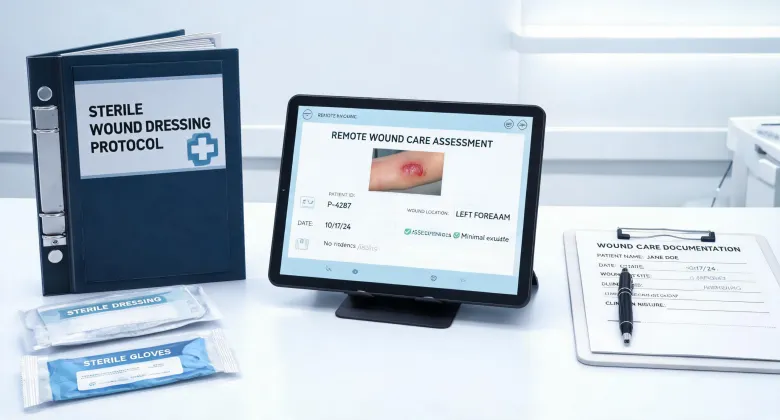
Take Mölnlycke wound care products as an example. The unit price of a dressing is easy to see. But a dressing that needs changing more often, or damages fragile skin, or doesn't stay in place—that product just doubled its real cost the moment you count nursing time. If the adhesive pulls off skin cells with every change (a problem some products are notorious for), the patient now has a new wound and a longer stay. That's not a supply cost; it's a clinical cost hiding inside a procurement decision.
Capital equipment (hematology analyzers, mechanical ventilators)
The purchase price of a hematology analyzer or a mechanical ventilator is just the entry ticket. The bigger costs live in the service contract, consumables, staff training, and downtime. I've seen hospitals pick a ventilator that was 15% cheaper, only to pay more in emergency service fees and replacement parts within eighteen months. In the ICU, a down ventilator isn't a repair ticket—it's a patient transfer, a canceled procedure, a team scrambling at midnight.
Surgical instruments (and yes, surgical staplers)
Someone always asks: what is a surgical stapler? Short version: it's a device that closes incisions and joins tissue with staples instead of sutures, saving significant OR time. But the relevant procurement question isn't how it works—it's how reliably it works. A cheap stapler that misfires extends surgery, causes bleeding, and keeps a patient in the hospital for days. You won't see that cost on the device invoice at all.
The common thread? Price is the only number available at the moment of purchase. Everything else—clinical outcomes, staff time, complications—stays invisible until after the decision's been made.
The Cost of Getting It Wrong (What I Actually See)
In March 2024, a hospital called at 9 PM needing a case of surgical drapes for a 7 AM procedure the next morning. Normal turnaround is five days. They'd switched to a budget supplier to save roughly $30 per case—and they'd just discovered the replacement drapes weren't compatible with their operating room equipment.
We found a vendor with the correct drapes in stock. The rush fee: $250. Staff time spent on emergency vetting, receiving, and verification: at least $200 in operational hours. We delivered at 5:47 AM. I didn't fully exhale until the OR confirmed they'd opened the cases. The hospital's original "savings"? $30 per case. They switched back to their incumbent supplier and stopped looking at budget-tier options entirely.
The cheapest option fails somewhere in the chain—clinical performance, compatibility, or supply reliability—and the fallout demolishes the original savings.
The most damaging costs are the ones that never make it onto an invoice: surgical site infections, extended bed days, patient pain, litigation risk. According to WHO guidelines on surgical site infection prevention (2016), patients who develop an SSI face up to an 11-fold increase in the risk of mortality. In the U.S., the CDC's HAI Prevalence Survey found that about 1 in 31 hospitalized patients has at least one healthcare-associated infection on any given day. If a cheaper surgical stapler increases the risk of staple line leaks by even a small margin, the expected cost of complications can dwarf the unit-price savings in a hurry.
To be clear: I'm not saying cheap products are universally bad. I'm saying that buying on price without modeling downstream costs is how a $30 savings becomes a $450 loss.
Why Hospitals Keep Making the Same Mistake
Here's the uncomfortable part. The problem isn't just a lack of data—it's that procurement metrics themselves are flawed.
Most hospitals evaluate buyers on "cost savings achieved against list price." That metric rewards exactly one thing: getting the price down. It doesn't reward clinical outcomes, supplier reliability, or total cost over time. A buyer who picks a slightly higher-priced dressing that reduces complications looks worse on paper than one who bought the cheapest option, even if the cheaper one costs the hospital system far more downstream.
The question everyone asks is: "What's your best price?" The question they should ask is: "What does this product cost across the full episode of care?"
How to Actually Buy on Total Cost of Ownership
I've seen a handful of hospitals do this right, and the framework is consistent:
- Map the full product lifecycle. For wound care, that includes: How often does it need changing? Does it protect fragile skin? Is removal painful? For capital equipment like a ventilator or analyzer: What does the service contract really cost? What's the expected lifespan and downtime risk?
- Include staff time. In a hospital, labor is the scarcest resource. Every product that steals extra minutes from a nurse or technician is costing you money beyond the purchase order.
- Quantify failure risk. Not just the probability, but the consequences. A surgical stapler that's 99.5% reliable instead of 99.9% might not look different at ordering time. Over a year of procedures, that half-percent difference becomes real patients with complications.
- Change the incentive. Procurement bonuses should be tied to outcomes per dollar, not savings against list price.
This is also where brands with documented clinical evidence earn their keep. When Mölnlycke designs a dressing with Safetac® technology—a silicone adhesive layer that reduces skin damage on removal and allows repositioning—the unit price might be higher. But a dressing that protects skin integrity and needs fewer changes changes the total cost structure. I'm not telling you what to buy; I'm telling you what to evaluate. The data should drive the decision, not the sticker price alone.
The Bottom Line
Total cost of ownership isn't a buzzword. It's a refusal to let a single line item hijack your entire cost structure.
Here's the rule I share with every hospital: the $30 you saved on a box of devices is only a saving if clinical outcomes stay identical. The moment your nurses spend extra time, your recovery rates slip, or your patient experiences skin damage or a complication, the money is gone—and usually, it's gone far beyond what you saved.
A rush order is always a symptom. The disease is poor procurement discipline. In six years of triaging emergencies, I've never once gotten a panicked call from a hospital that bought the right product for the right reason. The ones who bought on price? They keep my phone ringing.
