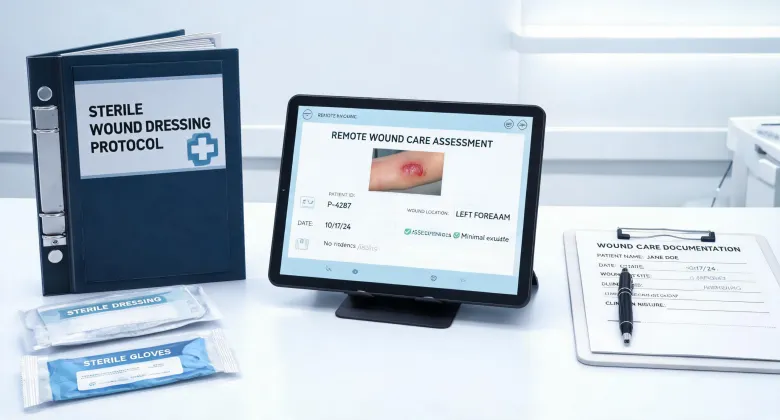
It was a Tuesday in early March 2024 when Dana, our head nurse, walked into my office holding a box of surgical gloves. “These are the new ones you ordered,” she said, pulling out a pair that looked like it had already lost its shape. “I can't get them on without worrying they'll tear mid-procedure.”
That was the moment I started thinking differently about how I buy things for the clinic.
I'm the office administrator for a multi-specialty clinic—about 40 clinicians and support staff across two locations. I handle the non-clinical purchasing: exam room supplies, gloves, dressings, disposables, paper products, you name it. Roughly $180,000 a year moves through my purchase orders, and I report to both operations and finance. In 2024, I was in the middle of a vendor consolidation project, trying to cut our list of eight supply vendors down to three or four.
The gloves Dana was holding came from a budget supplier we'd switched to in late 2023. The unit price was 30% lower than what we'd been paying our previous medical supply vendor. On a spreadsheet, it looked like a smart move. I'd even bragged to my finance director about the projected savings.
“These feel like plastic wrap,” Dana said.
I felt my stomach drop. (Note to self: never defend a purchase based on price alone in front of a clinician.)
The thing I've learned—and it took me a while to get here—is that in procurement, especially medical procurement, unit price is just the tip of the iceberg. Total cost of ownership includes what's on the invoice plus the cost of staff time dealing with failures, patient comfort, potential rework, expedited replacements, and the trust you lose with the people who have to use what you buy. But I didn't know that yet. In early 2024, I was still pretty proud of my spreadsheet.
The Glove Incident
When I took over purchasing for the clinic in 2020, we had 11 different vendors and no real system. One vendor was great on price but couldn't produce a proper invoice—they gave us handwritten receipts that finance rejected twice, costing us $2,400 in unreimbursed expenses. Another was reliable but slow; we often paid rush shipping fees to get basics on time. By 2023, I'd cleaned things up, but not all the way.
The move to the budget glove supplier had been my idea. Our regular supplier, Mölnlycke, had quoted a price higher than the budget option, and I figured I was doing the clinic a favor by shopping around. Mölnlycke had supplied our surgical drapes and gowns for years. Their quality was solid—the nurses never complained about their products. But the price, in my mind, was too high for disposable gloves.
So I switched. And the savings looked good on paper.
Three weeks later, the complaints started. Gloves tearing during procedures. Dressing adhesive failing on post-op wounds. Nurses comparing the budget brand to the old ones and losing confidence in the supplies. We had patients complaining about dressing changes that hurt more than they should. (Ugh, that was hard to hear.)
The worst incident came in late March. A clinician was inserting a surgical catheter during a minor procedure, and the sterile gloves she was wearing tore right at the cuff. The procedure had to be stopped. The patient was re-prepped. New equipment was opened. Our clinic director heard about it within the hour, and that's when I got the call.
I won't bore you with every detail of that meeting, but the takeaway was clear: the “cheap” gloves had already cost us more than we'd saved, just in that one incident.
The Mölnlycke Rep's Question
That's when I reached out to the Mölnlycke rep I'd brushed off a month earlier. I figured I'd be eating crow, but I needed to fix this.
What happened next surprised me. She didn't just talk about gloves. She walked me through what I now understand as a total cost of ownership approach. “You're not just paying for the product,” she said. “You're paying for it to work, to be available when you need it, and to not create problems downstream.” She showed me the Safetac® technology in their dressings—how it's designed to stay in place without damaging the wound bed on removal. She asked about our clinical outcomes, staff time, and reorder rates. Then she showed me the full portfolio: wound care dressings, surgical gloves, drapes and gowns, and infection prevention products.
I noticed a Mölnlycke Health Care logo on the paper towel dispenser in the break room. “Yeah, we make those,” she said. “It's all part of infection prevention.”
That was a light bulb moment. I'd been ordering paper towels from a separate office supply vendor, dispensers from another, and gloves from yet another. The Mölnlycke rep was offering me a chance to consolidate a whole chunk of supplies under one vendor, with one invoice, one delivery schedule, and one point of contact.
But I had to be honest with her. “I'm not a clinician,” I said. “I can't evaluate clinical benefits. I need to trust that you're bringing us products that work. What I can evaluate is whether you meet delivery dates, whether your invoicing is clean, and whether your customer support actually helps when something goes wrong.”
She nodded. “That's fair. Clinicians evaluate the products. You evaluate the process.”
The Six-Week Pilot
We ran a six-week pilot. Mölnlycke supplied surgical gloves, wound dressings, and drapes for one location while the other stayed with the budget vendor. I tracked everything: order delivery times, product complaints from nurses, rush reorder costs, invoicing errors, and clinician satisfaction.
The results were stark. The Mölnlycke location had zero product failures that interrupted a procedure. The budget vendor location had two more glove tears and three dressing adhesion complaints. I calculated the full cost of the budget option—including two replacement orders (we ran out faster because of waste), the hour our medical director spent on complaint calls, and the patient re-preps—and it turned out the “cheap” gloves were costing us roughly $3,200 more per quarter than Mölnlycke's.
To be fair, Mölnlycke's unit prices were higher. But the total cost of ownership was lower. I hadn't been calculating that.
During the pilot, a colleague from the diabetes clinic asked if I could source continuous glucose monitor supplies for her department. I told her that fell under clinical procurement—I handle non-clinical supplies and vendor relationships. Another clinician asked me, “What does ultrasound show that an MRI doesn't, for tendon injuries?” I laughed. “I genuinely have no idea. That's way outside my job description.” Those conversations reminded me of an important boundary: I don't make clinical decisions. I don't need to know what ultrasound shows or which continuous glucose monitor to buy. What I do need to know is how to evaluate a vendor's reliability, invoicing, and total cost to the organization.
The Result
In July 2024, we consolidated our exam room supplies, surgical consumables, and infection prevention products—including those paper towel dispensers—with Mölnlycke. The change cut my vendor list from eight to four. Our accounting team spends less time reconciling invoices. The nurses have stopped complaining. Dana actually said, “Whatever you changed, keep it.”
This pricing structure was accurate as of mid-2024. The medical supply market changes fast, so verify current pricing before making any decisions.
The Framework I Use Now
Here's what total cost of ownership looks like for me now:
- Base product price
- Delivery and freight, including minimum order thresholds
- Potential rush fees when stock runs unexpectedly low
- Storage and expiry management costs—your team's time
- Product failure costs: waste, procedure interruptions, replacements
- Staff time spent managing complaints or quality issues
- Invoicing and payment processing time
The lowest quoted price is rarely the lowest total cost. I learned that the hard way.
Here's something vendors won't tell you: the first quote is rarely the final conversation. Once you've shown you're a reliable customer, there's usually room to negotiate—but you have to be honest about what you're optimizing. If you just say “give me your lowest price,” you'll get a price, but maybe not the best value.
Granted, this approach takes more upfront work. You have to track outcomes, not just costs. Ask your clinicians for feedback. Create a simple complaint log. It's fairly straightforward once you build the habit.
As of now, Mölnlycke handles a significant chunk of our supply budget. Not because their products are cheaper—they aren't—but because they're reliable, their invoicing is clean, and their portfolio lets us consolidate. The Mölnlycke Health Care logo in our supply closet reminds me that infection prevention isn't just gloves and dressings; it's also the paper towel dispenser by the sink.
I could tell you the exact dollar amount we saved, but honestly, I'm not 100% sure of the figure—I'd have to dig out the spreadsheet. (I really should keep better records.) What I can tell you is finance is happy, Dana is happy, and I can sleep at night.
The next time a vendor shows you a low price, calculate the total cost. Your clinicians and your budget will thank you.
